
A Buttery, Flaky Pastry with Layers of Golden Dough and Bursts of Blueberry
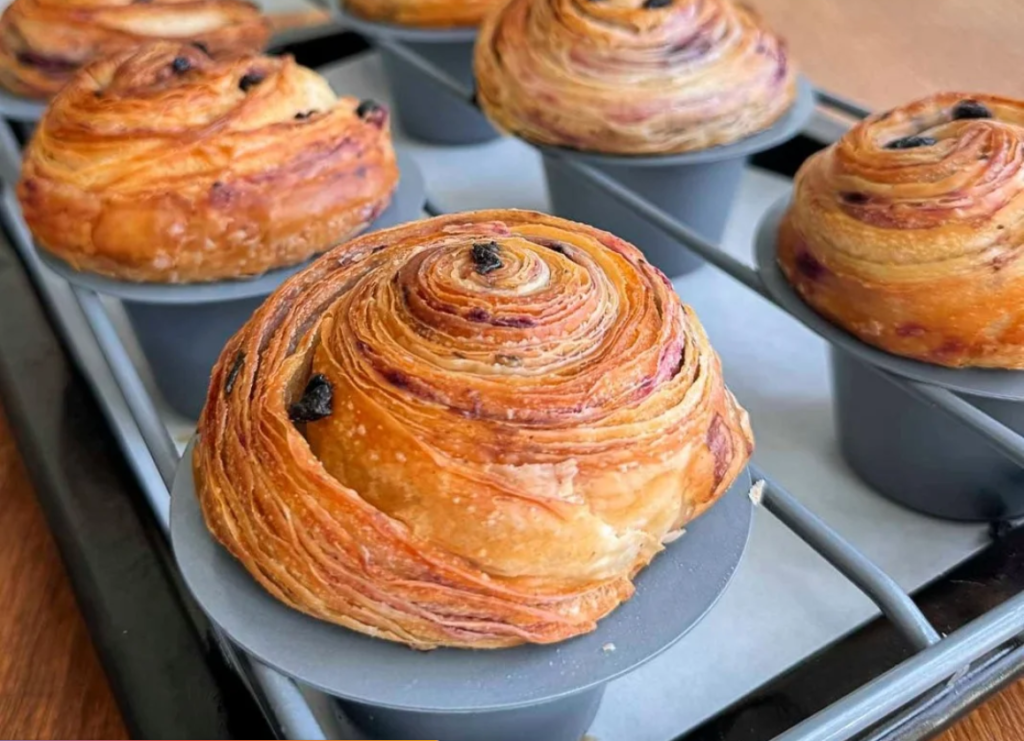
There are few things more beautiful than a freshly baked croissant. Its deeply golden surface, delicate layers, and crisp, buttery edges have a way of turning an ordinary breakfast into something memorable. But when that classic French pastry is made with sourdough and filled with sweet, jewel-like blueberries, it becomes something truly special.
These Sourdough Blueberry Croissants combine the rich, buttery character of laminated pastry with the gentle complexity of natural fermentation. Each croissant is rolled around a little blueberry filling, then baked until the layers puff into a golden, flaky spiral. The result is crisp on the outside, tender and airy inside, with sweet-tart blueberry tucked between the layers.
Making croissants takes time, but it is not difficult once you understand the rhythm. The secret is simply to keep the dough cold, handle it gently, and give the sourdough plenty of time to work its magic.
Sourdough Blueberry Croissants Recipe
Prep Time: 45 minutes
Fermentation: 8–12 hours
Chilling & Lamination: 4–6 hours
Proofing: 4–8 hours
Bake Time: 20–25 minutes
Makes: 10–12 croissants
Ingredients
For the Dough
- 100 g active sourdough starter
- 500 g bread flour
- 200 g cold whole milk
- 100 g cold water
- 50 g granulated sugar
- 10 g fine sea salt
- 40 g unsalted butter, softened
For the Butter Block
- 250 g unsalted butter, cold but pliable
For the Blueberry Filling
- 150 g blueberries, fresh or frozen
- 45 g granulated sugar
- 1 tablespoon lemon juice
- 1 teaspoon cornstarch
- ½ teaspoon vanilla extract
For the Egg Wash
- 1 large egg
- 1 tablespoon milk
Prepare the Sourdough Dough
Begin with a lively, active sourdough starter. It should be bubbly, fragrant, and recently fed. A strong starter is important because it provides the fermentation needed to give these croissants sourdough starter, milk, water, sugar, and bread flour. Mix until a rough dough forms and there are no their airy texture.
In a large mixing bowl, combine the sourdough starter, milk, water, sugar, and bread flour. Mix until a rough dough forms and there are no large pockets of dry flour.
Cover and let the dough rest for about 20–30 minutes.
Add the salt and softened butter. Knead gently until the dough becomes smooth and elastic. You don’t need to knead it as aggressively as a sandwich bread dough, but it should have enough strength to hold the butter layers later.
Shape the dough into a neat rectangle, cover it well, and refrigerate overnight.
The long fermentation gives the sourdough time to develop flavor. This is what gives the finished pastry its subtle depth—a delicate tang that works beautifully with rich butter and sweet blueberry.
Make the Blueberry Filling
While the dough is resting, prepare the filling.
Add the blueberries, sugar, lemon juice, and cornstarch to a small saucepan. Cook over medium-low heat, stirring occasionally, until the berries begin to break down and the mixture thickens.
Remove from the heat and stir in the vanilla.
Transfer the filling to a small bowl and allow it to cool completely.
The finished filling should be thick rather than runny. If it is too loose, it may escape from the croissants during baking.
For an especially smooth filling, you can crush some of the berries while leaving a few whole for texture.
Make the Butter Block
The butter block is the foundation of beautifully laminated croissants.
Place the butter between two sheets of parchment paper and gently pound or roll it into a rectangle.
The butter should be cold but flexible. This is one of the most important details in croissant making.
If the butter is too cold and hard, it can crack as you roll the dough. If it becomes too warm, it can melt into the dough, destroying the distinct layers you’re trying to create.
Ideally, the butter and dough should have a similar firmness.
Laminate the Dough
Remove the chilled dough from the refrigerator and roll it into a rectangle large enough to enclose the butter block.
Place the butter in the center and fold the dough over it, sealing the edges.
Roll the dough gently into a long rectangle. Don’t press too aggressively. Your goal is to lengthen the dough while keeping the butter evenly distributed.
Fold the dough into thirds, like folding a letter.
Wrap it and refrigerate for 30–45 minutes.
Repeat the rolling and folding process two more times, chilling the dough between each fold.
This is the stage where the croissant begins to develop its signature structure.
Every fold creates more layers of dough and butter. When the croissants eventually enter the hot oven, the water contained in the butter turns into steam, pushing those delicate layers apart and creating the flaky texture we love.
Shape the Blueberry Croissants
After the final chilling period, roll the dough into a large rectangle, approximately 4–5 mm thick.
Trim the edges with a sharp knife to create clean, straight sides.
Cut the dough into long triangles.
Place a small spoonful of cooled blueberry filling near the wide end of each triangle. Avoid overfilling them—the filling should complement the croissant rather than overwhelm its delicate layers.
Starting from the wide end, gently roll each triangle toward the pointed tip.
Don’t roll too tightly. The dough needs room to expand during proofing and baking.
Arrange the croissants on parchment-lined baking trays with plenty of space between them.
The Final Proof
Cover the shaped croissants loosely and leave them at room temperature to proof.
Because this is sourdough pastry, the timing can vary considerably. Depending on the temperature of your kitchen and the strength of your starter, proofing may take 4–8 hours or longer.
Look for visual signs rather than relying entirely on the clock.
The croissants should become noticeably larger, lighter, and slightly wobbly when the tray is gently moved.
This stage should not be rushed.
If the croissants are underproofed, they may bake up heavy and dense. Properly fermented croissants will have the light, open texture that makes them so special.
Bake Until Deeply Golden
Preheat your oven to 200°C (400°F).
Whisk together the egg and milk to make the egg wash.
Brush the croissants gently with the egg wash, taking care not to press down on the delicate dough.
Bake for about 10 minutes, then reduce the oven temperature to 180°C (350°F).
Continue baking for another 10–15 minutes, or until the croissants are deeply golden, crisp, and beautifully puffed.
The exact baking time will depend on the size of your croissants and your oven.
Don’t be afraid of a rich golden color. Croissants benefit from thorough baking, and that deep caramelization gives them their characteristic flavor and crisp exterior.
Allow them to cool for at least 15 minutes before serving.
Tips for Perfect Sourdough Blueberry Croissants
Keep the Dough Cold
Temperature is everything when working with laminated dough. If the butter begins to soften too much, stop rolling and refrigerate the dough.
Don’t Add Too Much Filling
A little blueberry filling goes a long way. Overfilling can cause the croissants to leak and interfere with their beautiful layers.
Use an Active Starter
Your sourdough starter should be strong and bubbly. A weak starter may result in a much longer fermentation and less lift.
Watch the Dough
Sourdough fermentation is affected by temperature, flour, and starter strength. Use the appearance and feel of the dough as your guide rather than following the clock blindly.
Give the Croissants Space
They expand considerably during proofing and baking. Crowding the tray can cause them to bake unevenly.
Let Them Cool
Freshly baked croissants smell irresistible, but allowing them to cool slightly gives the layers time to set and the blueberry filling time to thicken.
How to Serve Sourdough Blueberry Croissants
These croissants need very little decoration.
Serve them warm with a cup of coffee, tea, or a glass of cold milk. A light dusting of powdered sugar makes them beautiful enough for a brunch table.
For a fresh finish, add a little lemon zest over the top. The brightness of lemon pairs wonderfully with blueberry and cuts through the richness of the butter.
You can also make a simple lemon glaze with powdered sugar and lemon juice and drizzle it over completely cooled croissants.
For a special weekend breakfast, serve them alongside fresh berries, Greek yogurt, and a pot of strong coffee.
Why You’ll Love This Recipe
What makes these croissants so memorable is the balance of flavors.
The sourdough brings a gentle tang. The butter adds richness. The long fermentation develops depth. The blueberry filling contributes sweetness and a touch of acidity.
Then there is the texture.
The outer layers are crisp and delicate, breaking into beautiful flakes with every bite. Inside, the croissant remains tender and airy, with ribbons of blueberry nestled between buttery layers.
It is a pastry that feels luxurious without being overly sweet.
And because the dough is naturally fermented, you get an extra dimension of flavor that makes homemade croissants feel truly special.
A Little Patience, A Lot of Reward
Croissants are not a pastry to rush.
They ask for cold butter, careful folds, long fermentation, and a little patience. But that patience is exactly what makes the final moment so rewarding.
When the oven door opens and you see those beautifully puffed, golden pastries, all the rolling and chilling suddenly feels worthwhile.
Break one open and listen for that delicate crispness. Look at the layers. Notice the buttery aroma and the little streaks of blueberry tucked inside.
Then take a bite.
Crisp, buttery, gently tangy, and bursting with blueberry—these Sourdough Blueberry Croissants are a beautiful reminder that some of the best things in baking simply cannot be hurried.