Introduction
Few breakfast breads are as beloved as the English muffin. With their soft, chewy crumb and golden-brown crust, English muffins are perfect for toasting, spreading with butter, layering with jam, or serving as the base for a hearty breakfast sandwich. Unlike typical bread, English muffins are cooked on a griddle or skillet instead of baked, giving them their unique texture and flavor.
Making them at home may sound intimidating, but the process is surprisingly straightforward and the results are far better than store-bought versions. Freshly made English muffins are light, flavorful, and have the perfect “nooks and crannies” that soak up butter or melted cheese.
Whether you enjoy them plain, sweet, or savory, once you try homemade English muffins, you’ll never go back to packaged ones.
Why Make English Muffins at Home?
- Freshness: No preservatives just simple, wholesome ingredients.
- Flavor: Homemade muffins are richer in taste, with a slight tang from fermentation.
- Texture: That classic chewy interior and crispy edges when toasted.
- Versatility: Delicious for breakfast, lunch, or as a snack.
- Cost-effective: Far cheaper than buying artisanal bakery muffins.
Ingredients
This recipe makes about 8–10 English muffins.
- 3 ½ cups (420 g) all-purpose or bread flour
- 1 ¼ cups (300 ml) warm milk
- 2 tbsp unsalted butter, melted
- 1 tbsp sugar
- 2 tsp instant yeast (or 1 packet active dry yeast)
- 1 tsp salt
- 1 egg (optional, for richer dough)
- Cornmeal, for dusting
Step-by-Step Instructions
1. Prepare the Dough
In a large mixing bowl, whisk together warm milk, sugar, and yeast. Let sit for 5 minutes until foamy (skip this wait if using instant yeast).
Add melted butter, salt, flour, and the egg if using. Mix until a shaggy dough forms.
Turn onto a floured surface and knead for 8–10 minutes until smooth and elastic. (You can also use a stand mixer with a dough hook.)
2. First Rise
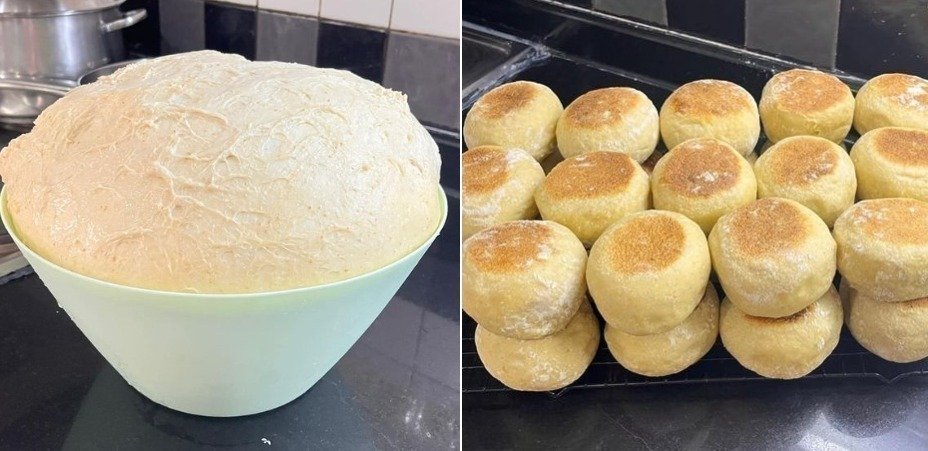
Place the dough in a greased bowl, cover, and let rise at room temperature for 1–2 hours, or until doubled in size.
3. Shape the Muffins
Punch down the dough and turn it onto a lightly floured surface. Roll out to about ½–¾ inch thickness.
Using a round cutter or drinking glass (about 3 inches wide), cut circles from the dough. Gather scraps, re-roll, and cut more muffins.
Dust a baking sheet with cornmeal and place the cut dough rounds on top. Sprinkle more cornmeal over the muffins.
Cover with a towel and let rise again for 30–45 minutes until puffy.
4. Cook the Muffins
Heat a large nonstick skillet or griddle over medium-low heat.
Place 3–4 muffins in the pan (depending on size) and cook for 6–7 minutes per side, until golden brown and cooked through. Adjust heat as needed to prevent burning before the inside cooks.
Transfer to a wire rack to cool. Repeat with remaining muffins.
5. Serve
Once cooled slightly, split muffins with a fork (not a knife!) to preserve the signature nooks and crannies. Toast and enjoy with butter, jam, or fillings.
Nutrition (Per Muffin, approx. based on 10 muffins)
- Calories: ~180
- Carbs: 33 g
- Protein: 5 g
- Fat: 3 g
- Fiber: 1 g
Final Thoughts
English Muffins are a breakfast classic for good reason they’re versatile, delicious, and the perfect canvas for sweet or savory toppings. Making them at home means you control the ingredients, texture, and flavor, creating muffins that are fresher and more wholesome than store-bought.
So next time you want to level up your morning routine, skip the supermarket aisle and make a batch of warm, golden English muffins in your own kitchen. They might just become your new favorite homemade bread.
Tips for Perfect Homemade English Muffins
- Use warm milk, not hot milk. Milk that is too hot can kill the yeast and prevent the dough from rising properly.
- Cook on low to medium-low heat. English muffins need time to cook through the center without burning on the outside.
- Dust generously with cornmeal. This creates the classic bakery-style texture and prevents sticking.
- Split with a fork. Instead of slicing with a knife, use a fork to separate the muffins and create more nooks and crannies.
- Check the internal temperature. Fully cooked English muffins should reach about 190–200°F (88–93°C) inside.
- Toast before serving. Toasting enhances the flavor and gives the muffins a delicious crispy edge.
- Let them cool completely. Cutting into hot muffins can make the interior gummy.
Frequently Asked Questions (FAQs)
Why are my English muffins dense instead of light and fluffy?
Dense muffins are usually caused by under-proofing, old yeast, or adding too much flour. Make sure the dough rises fully during both proofing stages.
Can I make English muffins without cornmeal?
Yes. Cornmeal provides the traditional texture, but you can substitute semolina flour or simply use a lightly floured surface.
How do I get the classic nooks and crannies?
Use a fork to split the muffins instead of a knife. This helps preserve the airy interior pockets that English muffins are known for.
Can I make the dough ahead of time?
Absolutely. After kneading, place the dough in the refrigerator overnight. Let it come to room temperature before shaping and cooking.
How should I store homemade English muffins?
Store them in an airtight container at room temperature for up to 3 days or refrigerate for up to 1 week.
Can I freeze English muffins?
Yes. Once completely cooled, place them in a freezer-safe bag and freeze for up to 3 months. Thaw and toast before serving.
Why are my muffins burning before the inside is cooked?
The skillet is likely too hot. Reduce the heat and cook them more slowly so the center has time to bake through.
Can I use whole wheat flour?
Yes. Replace up to 50% of the all-purpose flour with whole wheat flour for a heartier flavor and texture.
What are the best toppings for English muffins?
Popular choices include butter, jam, honey, peanut butter, cream cheese, avocado, eggs, bacon, sausage, or melted cheese.
Can I make sourdough English muffins?
Yes. You can replace some of the flour and liquid with active sourdough starter to create flavorful sourdough English muffins with a slightly tangy taste.