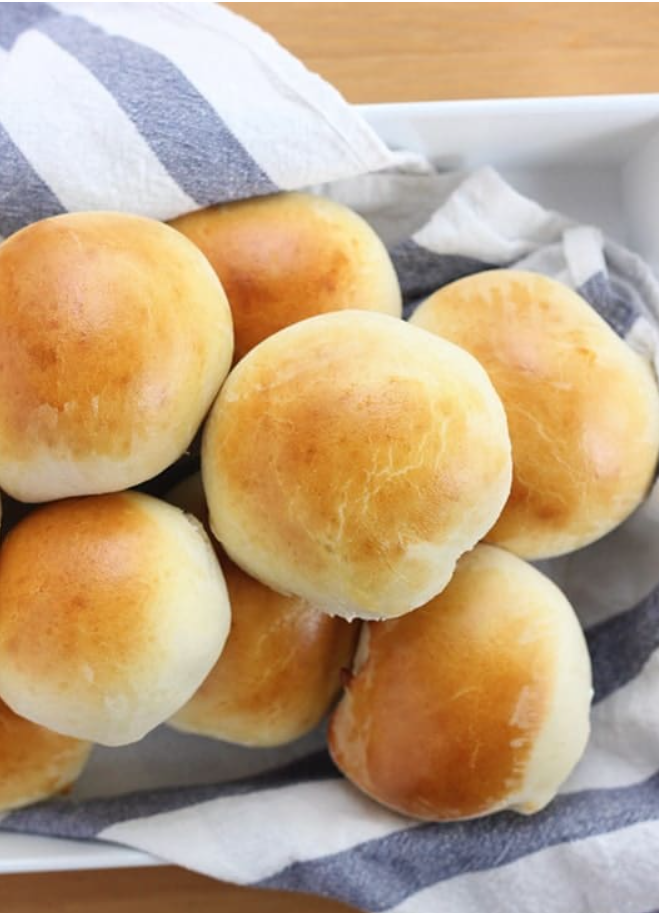

There is something special about homemade hamburger buns. They come out of the oven with golden tops, soft sides, and a fresh-baked smell that makes the whole kitchen feel warm. These homemade sourdough hamburger buns are a lovely choice when you want to make burgers from scratch and give them a little extra care.
The photo shows a batch of round buns with smooth, glossy tops and a light golden-brown finish. They look soft enough to press gently between your fingers, yet sturdy enough to hold a juicy burger and all your favorite toppings.
Sourdough adds a mild tang and a little more depth of flavor than ordinary bread rolls. The dough takes time to rise, but most of that time is hands-off. With an active sourdough starter, a few basic ingredients, and some patience, you can make a batch of buns that taste fresh and feel right at home on the dinner table.
Whether you are planning a weekend barbecue, making cheeseburgers for the family, or preparing rolls for sandwiches, this recipe is worth keeping close.
Why You Will Love These Sourdough Hamburger Buns
These buns have a soft, tender crumb with a thin, golden crust. They are made with sourdough starter, which gives the dough its rise and brings a gentle flavor to the finished bread.
The dough is enriched with milk, butter, and a little sugar. Milk helps create a tender texture, butter adds richness, and sugar supports browning while balancing the sourdough flavor.
An egg wash gives the tops their beautiful shine. You can leave the buns plain or sprinkle them with sesame seeds before baking.
Homemade buns also let you choose the size. Make larger rolls for generous burgers or smaller ones for sliders. Either way, the result is a fresh, soft bun made in your own kitchen.
Ingredients You Will Need
This recipe makes approximately 10 hamburger buns.
- 500 g bread flour or strong all-purpose flour
- 100 g active sourdough starter, at 100% hydration
- 250 g whole milk, lukewarm
- 1 large egg
- 40 g unsalted butter, softened
- 25 g granulated sugar
- 10 g salt
For the egg wash:
- 1 egg
- 1 tablespoon milk
Optional topping:
- Sesame seeds
- Poppy seeds
Use a bubbly, active starter that has risen well after feeding. A starter that is ready to bake with will usually have a pleasant fermented smell and plenty of visible bubbles.
How to Make Sourdough Hamburger Buns
Step 1: Mix the Dough
In a large mixing bowl, combine the milk, active sourdough starter, egg, and sugar. Whisk until the starter is mostly dispersed.
Add the flour and salt. Mix with a spoon or your hands until no dry patches remain. The dough may feel slightly sticky at this stage, which is normal.
Cover the bowl and let the dough rest for about 20–30 minutes. This short rest gives the flour time to absorb the liquid and makes the dough easier to work with.
Step 2: Knead in the Butter
Add the softened butter to the dough. Knead by hand for about 8–12 minutes, or use a stand mixer with a dough hook for approximately 6–8 minutes on low to medium-low speed.
At first, the butter may make the dough feel slippery. Keep kneading until it is fully absorbed and the dough becomes smoother and more elastic.
The dough should feel soft and slightly tacky, rather than wet and difficult to handle. Avoid adding too much extra flour, because that can make the baked buns dense.
Step 3: Let the Dough Rise
Transfer the dough to a lightly greased bowl and cover it. Leave it at a comfortable room temperature until it looks noticeably larger, feels airy, and shows signs of fermentation.
Depending on the strength of your starter and the temperature of your kitchen, this may take around 4–8 hours or longer. Use the dough’s appearance and feel as your guide rather than relying only on the clock.
The dough does not always need to double completely. Look for a clear increase in volume and a lighter texture.
Step 4: Divide and Shape
Turn the dough onto a clean work surface. Divide it into 10 equal portions, approximately 90–95 g each.
Shape each portion into a smooth ball. To do this, gently pull the edges toward the center, turn the dough over, and roll it against the work surface until the top becomes smooth.
Place the balls on a baking tray lined with parchment paper. Leave enough space between them to expand.
Gently press each ball down to make a slightly flatter shape. This helps create buns that are easier to use for hamburgers rather than tall, round bread rolls.
Step 5: Complete the Final Rise
Cover the shaped buns loosely and leave them to rise until they look puffy and feel light. Depending on the room temperature and starter activity, this may take about 2–4 hours.
Avoid rushing this step. If the buns go into the oven before they are ready, they may turn out dense or split unevenly.
To check their readiness, gently press the side of one bun with a fingertip. The dough should slowly spring back rather than immediately returning to its original shape.
Step 6: Brush with Egg Wash
Preheat your oven to 375°F (190°C).
Whisk one egg with a tablespoon of milk. Brush a thin layer over the tops of the buns, taking care not to press down on the risen dough.
If you like sesame seeds, sprinkle them over the egg wash. They add a classic hamburger-bun finish and a little crunch.
Step 7: Bake Until Golden
Place the tray in the preheated oven and bake for approximately 18–25 minutes, depending on the size of your buns and your oven.
The tops should become golden brown, and the buns should feel light but set. If you use a kitchen thermometer, the center of a bun should reach approximately 190–200°F (88–93°C).
Remove the tray from the oven and let the buns rest for a few minutes. Transfer them to a wire rack to cool completely before slicing.
The crumb continues to set as the buns cool, so cutting them too early can make the inside seem gummy.
Tips for Soft, Golden Hamburger Buns
Use an active starter. A healthy starter is important for good rise and a light crumb. If your starter is sluggish, the dough may need much longer to ferment.
Measure by weight. Flour can vary greatly depending on how it is scooped into a measuring cup. A kitchen scale gives more consistent results.
Watch the dough, not just the clock. Sourdough fermentation changes with room temperature and starter strength. Let the dough show you when it is ready.
Shape with a smooth surface. Good surface tension helps the buns rise evenly and gives them a neat, rounded appearance.
Do not overbake. Once the tops are golden and the centers are cooked through, remove the buns from the oven. Baking them too long can dry out the crumb.
Let them cool before slicing. This helps the inside remain soft and prevents the bread from becoming compressed.
How to Use Homemade Sourdough Hamburger Buns
These buns are not just for classic hamburgers. Their mild sourdough flavor works well with many fillings.
Fill them with grilled beef patties, melted cheddar, lettuce, tomato, and your favorite sauce for a traditional burger. They are equally good with grilled chicken, turkey burgers, or a vegetable patty.
For a simple lunch, slice a bun and add leftover roast chicken, cheese, and fresh greens. You can also toast the cut sides lightly in a skillet with a little butter before adding the filling.
Smaller buns are ideal for sliders, pulled chicken, or mini sandwiches for a family gathering.
Storage and Freezing
Once completely cool, store the buns in an airtight bag or container at room temperature for up to 2–3 days.
For longer storage, freeze them in a freezer-safe bag for up to 3 months. You can freeze them whole or slice them first so they are ready to use.
Thaw at room temperature, then warm briefly in the oven if you want to refresh the crust. If the buns are already sliced, lightly toasting the cut sides in a skillet can bring back some of their fresh-baked texture.
Frequently Asked Questions
Can I make the dough overnight?
Yes. After the initial fermentation, you can refrigerate the dough to slow it down. The next day, allow it to warm enough to shape comfortably, then shape and complete the final rise. The timing will depend on how much the dough fermented before refrigeration.
Why are my sourdough buns dense?
Common causes include an inactive starter, insufficient fermentation, or adding too much flour during kneading. Underproofing the shaped buns can also lead to a tight crumb.
Can I use all-purpose flour?
Yes, strong all-purpose flour can work well. Bread flour often provides a slightly chewier structure, while all-purpose flour may give a softer result.
Can I make the buns without an egg wash?
Yes. You can brush the tops with milk for a softer, less glossy finish, or leave them plain. The egg wash mainly affects color and shine.
How do I keep the buns soft?
The milk and butter help keep the crumb tender. Store the buns in an airtight container once they have cooled, and avoid baking them longer than necessary.
Final Thoughts
Homemade sourdough hamburger buns bring a fresh, simple touch to burgers and sandwiches. The golden tops, soft centers, and mild sourdough flavor make them a welcome addition to a homemade meal.
Although the dough needs time to rise, the process itself is straightforward. Mix the ingredients, allow the starter to do its work, shape the buns, and bake until beautifully golden.
Make a batch for your next burger night, save a few for lunch, and freeze the rest for another day. Once you taste a burger on a fresh homemade bun, you may find yourself making these again and again.
Recipe Card
Prep Time: 30 minutes
First Rise: 4–8 hours or longer
Final Rise: 2–4 hours
Bake Time: 18–25 minutes
Total Time: Varies with fermentation
Yield: 10 buns
Course: Bread, Lunch, Dinner
Cuisine: American-inspired
Ingredients
- 500 g bread flour
- 100 g active sourdough starter
- 250 g lukewarm whole milk
- 1 large egg
- 40 g softened unsalted butter
- 25 g sugar
- 10 g salt
- 1 egg and 1 tablespoon milk for the egg wash
- Sesame seeds, optional
Instructions
- Mix the starter, milk, egg, and sugar.
- Add flour and salt; mix until a rough dough forms.
- Rest for 20–30 minutes.
- Knead in the softened butter until smooth and elastic.
- Cover and ferment until noticeably expanded and airy.
- Divide into 10 equal portions, shape into smooth balls, and flatten slightly.
- Cover and proof until puffy.
- Brush with egg wash and sprinkle with sesame seeds, if desired.
- Bake at 375°F (190°C) for 18–25 minutes, until golden and cooked through.
- Cool completely on a wire rack before slicing.